
Luang Prabang is small city in north central Laos located on the Mekong river. it was the former capital of the Lan Xang, the historical kingdom of present day Laos. It and other areas of present day Laos were part of a French Protectorate between 1893 and 1953, with a brief period under Japanese control in 1945. The administrative capital was transferred to Vientiane at various times and most recently in 1946. At that time Luang Prabang remained the royal residence and religious center of Laos. The monarchy was abolished in 1975 when the Lao People’s Revolutionary Party took over, so there is no longer a royal presence, but Luang Prabang continues to be the religious center of Laos. It was designated a UNESCO World Heritage Site in 1995 for its unique blending of traditional Lao architecture, European colonial buildings (from it’s time under French rule) and over 30 Buddhist temples. For these reasons as well as its picturesque setting at the confluence of the Nam Khan River and Mekong River, and with the addition of a high-speed rail line connecting Laos with China, Luang Prabrang is a magnet for tourists.
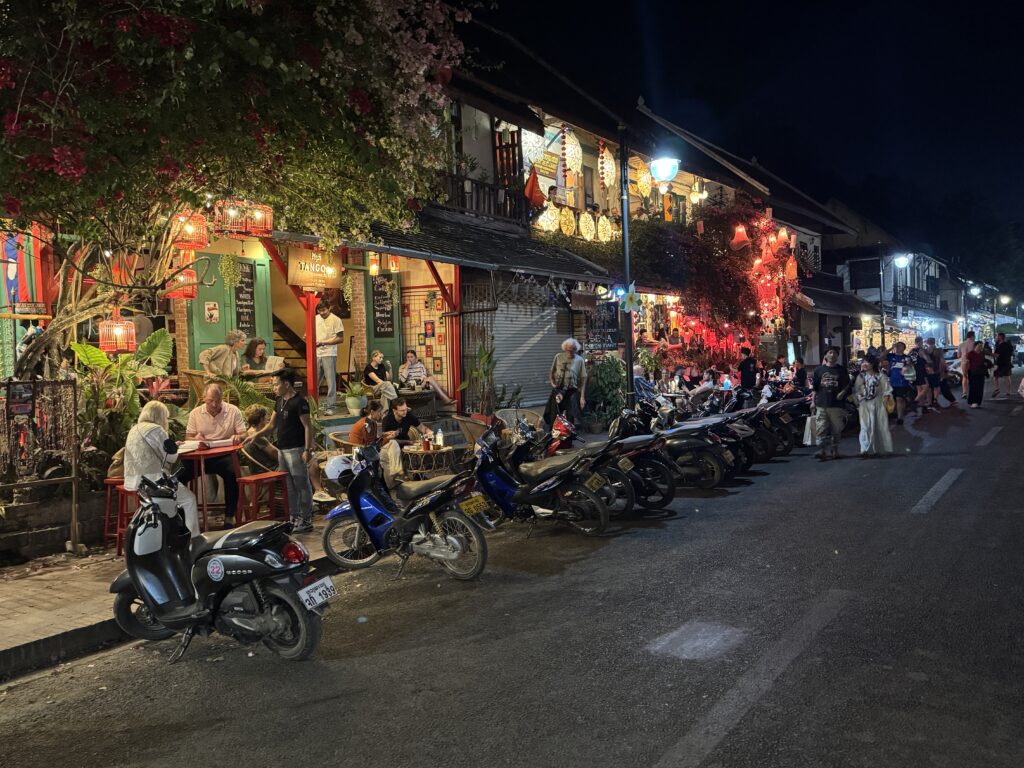
I had heard from several people who had been to Laos that Luang Prabang was their favorite place and was much looking forward to seeing it for myself. I originally planned to spend four nights and three full days here, but had to cut the visit short by a day in order to get to Vientiane in time to participate in site visits we had schedule with a Pangea partner located there.
We had originally hoped to visit a project of a Pangea partner located outside of Luang Prabang, but the logistics proved too difficult so we planned to just enjoy our time there as typical tourists. My overall impression of Luang Prabrang is that it is a victim of its own success. In many places it seemed to be overrun with tourists, primarily from China (and likely the result of a recent high speed rail line connecting Laos and China). Granted I visited during the high season and I suspect it is less crowded at other times of the year. If I ever make a return visit, I would like to visit when it is less crowded. That said, I had a wonderful time exploring Luang Prabang, visiting a local weaving cooperative, observing the alms-giving procession early one morning, learning about how rice is traditionally grown and harvested, and visiting a very beautiful waterfall.
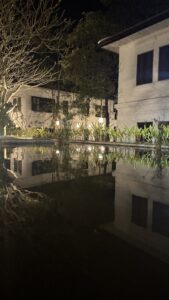
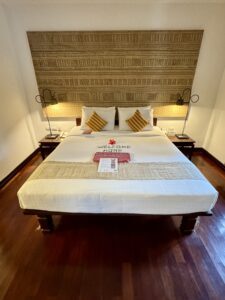
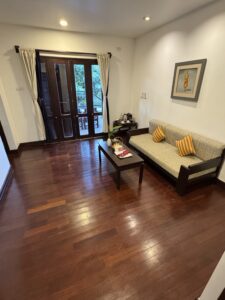
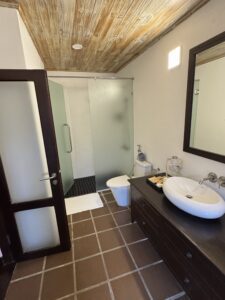
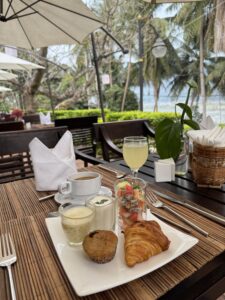
First a word about our hotel. We stayed at the Victoria Xiengthong Palace, which is at the location of the last residence of the Laos royal family. Several of the buildings, including the building where my room was located were renovated original buildings used by the royal family. The Hotel is at the end of the old town section of Luang Prabang and was very quiet for most of the day. While the town was crowded, the hotel had rooms available, which surprised me given it’s quality and location. It provides free transfer service on arrival and departure, the rooms are spacious and comfortable, and the included breakfasts are very good. I thought it was a bargain at less than $100 a night.
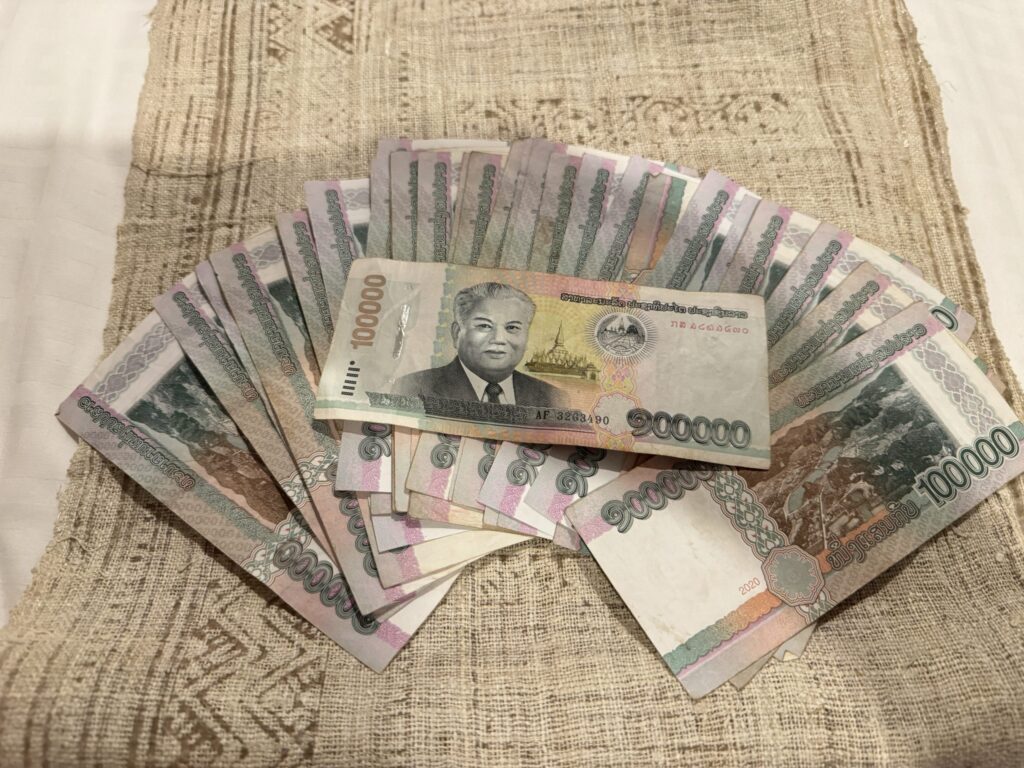
Most things are relatively inexpensive in Laos. The dollar is currently strong and the Laos Kip has undergone serious devaluation as a result of recent high inflation (31% in 2023, 23% in 2024, and 8% in 2025). The exchange rate was 1 USD – 21,000 Kip at the time of my visit. With the largest bill a 100,000 Kip note (less than $5), and many smaller places not accepting credit cards, it’s easy to feel like a high-roller. This is what 3 million Kip looks like.
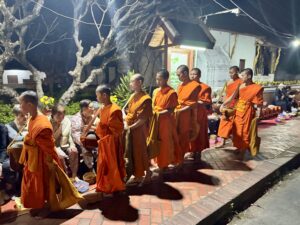
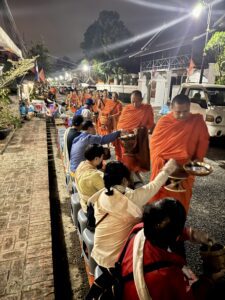
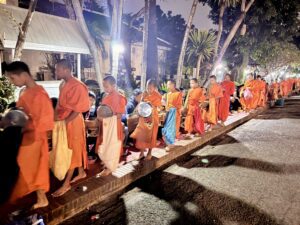
One of the events that Luang Prabang is known for is morning alms giving. Throughout Southeast Asia, Buddhist monks rise before sunrise and walk the area surrounding their temple to accept alms, or offerings from local people. The alms are predominantly food with some sources indicating that it is the only source of food for monks. Local people offer food to monks in exchange for spiritual blessings. While this is typically a low key affair, it has become a major tourist attraction in Luang Prabang. There are many “tours” where you can secure a stool along the monks’ path and be provided with sticky rice or other food to offer to the monks when they pass by. One of the larger temples (called wats) was very near our hotel so it didn’t require a lot of effort to get up and observe the ritual. I had originally planned to get up each morning of my stay, but after seeing the crowds of noisy tourists the first morning, decided my time was better spent sleeping in!
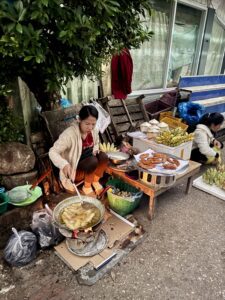
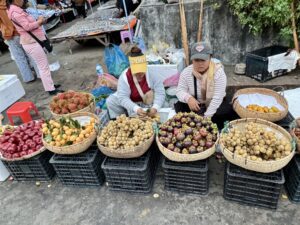
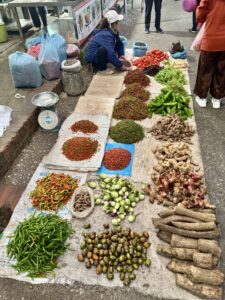
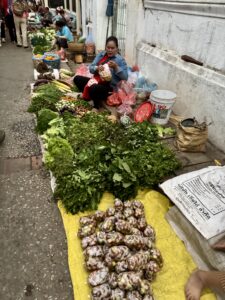
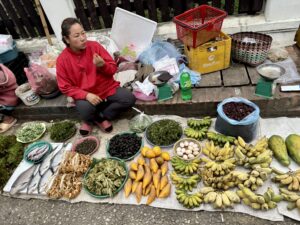
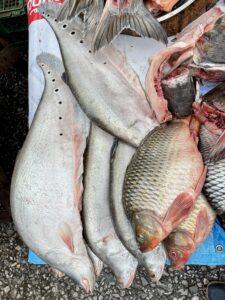
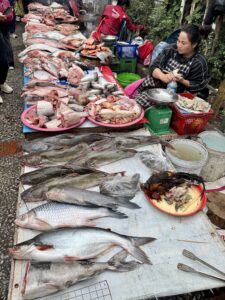
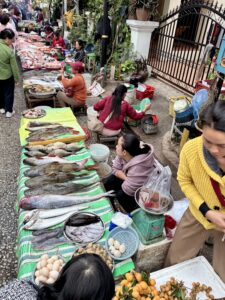
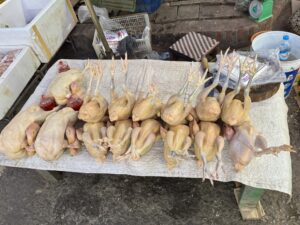
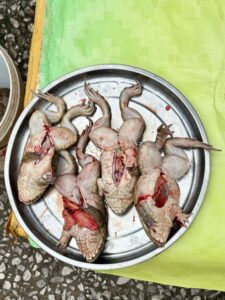
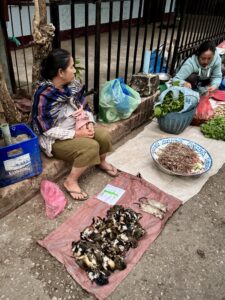
Since I was up early the first morning to observe alms giving, I took a stroll through the morning market. Luang Prabang, like most towns in Thailand and Laos has a morning market where local people come to sell produce and meats, and a night market where street food and non-perishable items like cloths, shoes, and souvenirs are sold. I was fascinated with the sights and smells of the markets and found the morning markets particularly interesting.

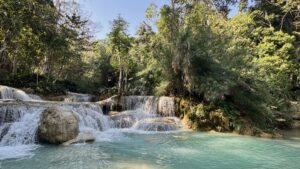
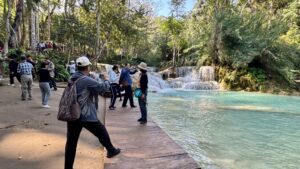
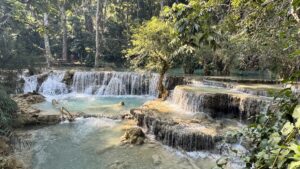
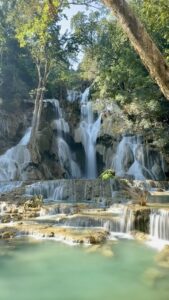
There are many excursions that are offered in the area surrounding Luang Prabang, from elephant sanctuaries, boat trips on the Mekong, biking, hiking, cooking classes, visiting local villages, other site seeing opportunities. One of the most popular is visiting Kuang Si Falls that are located about an hour drive from the city. They are known for beautiful milky turquoise water and also for being very crowded. I had read that the best time to go was first thing in the morning when they open so Paul and I decided to give it a try one morning. After negotiating a bit with a local van driver and being referred to another driver, we set off for the falls. We arrived at around 9:30 and were surprised at how many cars and buses were already in the parking lot. It wasn’t as bad as I feared though as most people stuck to paved walkways rather than dirt trails and many people did not walk to the top of the falls. The falls are indeed very pretty and once out on the trail, it was nice to be away from the crowds. The ride there and back was also a bit of an adventure.
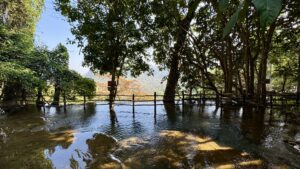
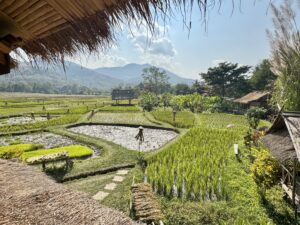
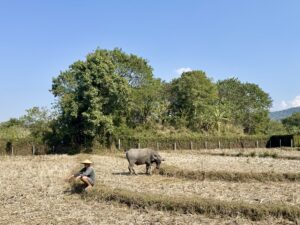
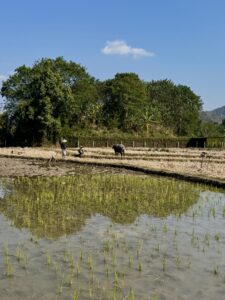
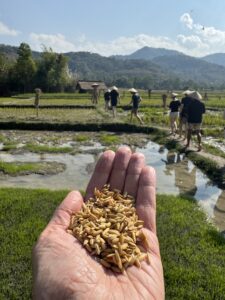
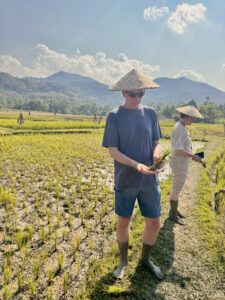
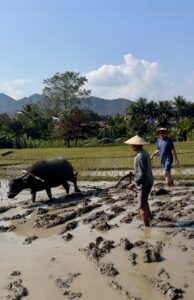
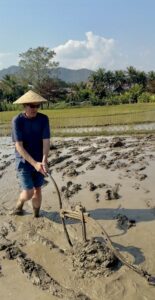
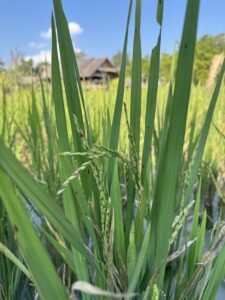
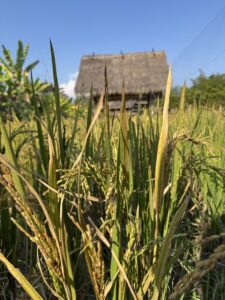
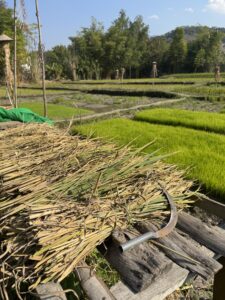
On one afternoon, we visited an organic rice farm that offers a rice growing experience during which they show each step of growing and harvesting sticky rice. I found the experience educational and fun. The program at the Living Land Farm is well thought out and engaging. While we decided to do this pretty last minute, it turned out to be one of my favorite activities of this trip.
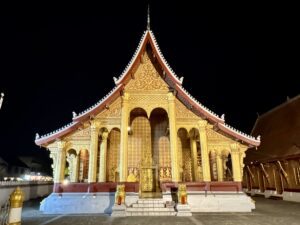
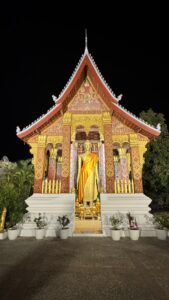
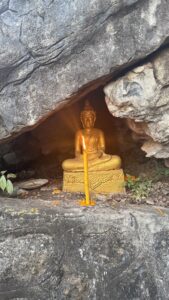
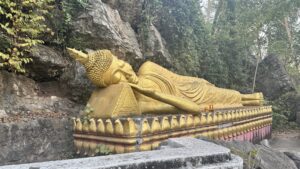
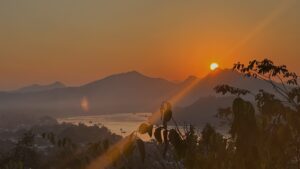
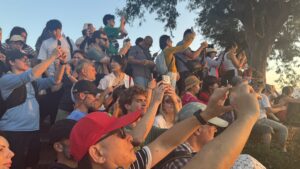
There are several wats in the city. By this time of the trip I was suffering a bit from wat fatigue so didn’t pay as much attention to them as they probably warranted. I did, however, enjoy walking around a deserted wat close to our hotel at night as well as viewing some of buddhas and other statutes associated with the wat on Mount Phousi. I decided to watch the sunset the last night we were in Luang Prabang from the top of Mount Phousi. As you’d expect, it was pretty crowded. The views from the top were nice and easily worth the short walk up. The sunset was also nice, but I think I enjoyed the walk down the back side of the hill more. It was peaceful and there were lots of interesting things to see.
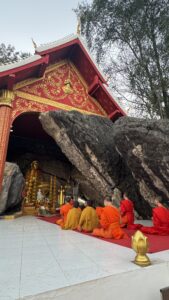
A wat with young monks chanting while their dogs sleeps at the door.
The waterfalls seemed quite unusual..I would enjoy that.
Wow, Luang Prabang does look much more crowded! Glad you could go there.