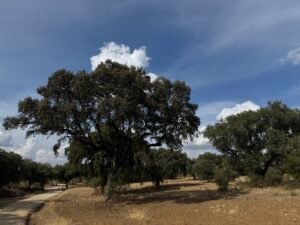
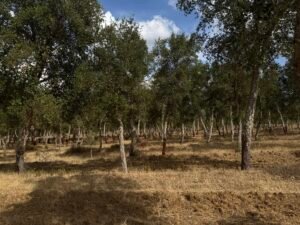
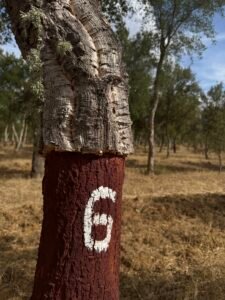
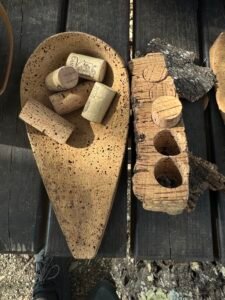
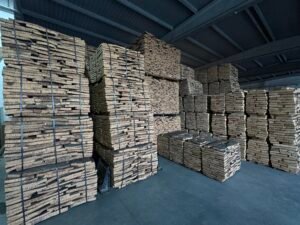
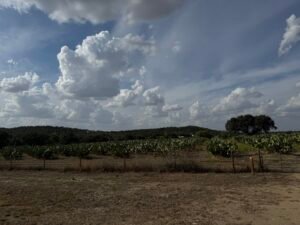
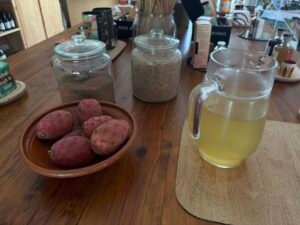
We spent most of our time inside the old walled city. Our visit was a little rushed as we spent just one night in Evora. We spent the first afternoon in the countryside touring a cork forest and factory. We found a cork tour offering on Get Your Guide that had availability during a time that fit our schedule. The tour also included learning about commercial prickly pear cactus harvesting, which I think made it less popular than other tours. We debated about going, but since it was the only offering that was reasonably priced at a time that fit our schedule we decided to give it a try. I am really glad that we did. Not only did we learn a lot about both cork and prickly pear harvesting, but we were the only people on the tour. The tour with Pepe Aromas, an all organic farm, spends most of the time walking through their cork forests, with a stop at a prickly pear field toward the end. We ended at their office and small gift store that is in a converted railroad station.
Cork:


Prickly Pear Cactus:

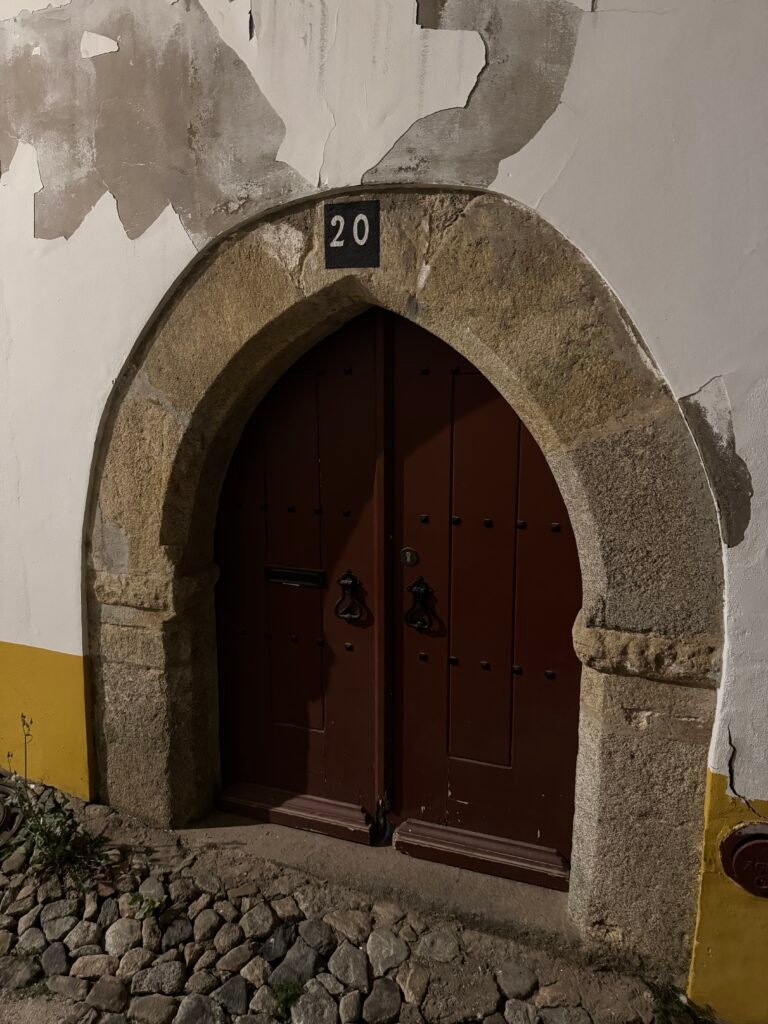
We returned to Evora and settled in to our room at the Morea Suites hotel, which was very nice. We made reservations to have dinner at the hotel, but as the evening approached we looked to see if there were other nearby restaurants that might be a little more unique. We found a small restaurant , Tres Marmelos, that looked promising that was just a few doors up the street from our hotel. They were completely booked until late in the evening, but were offered us seats at a small bar that overlooked their food prep area. We decided to give it a try and were glad that we did as it turned out to be the best meal of our trip. Sitting at the bar added to the experience as one of the chefs would describe how he was assembling the dishes that we ordered. I also enjoyed walking around the deserted old town for a bit after dinner before we returned to our hotel.
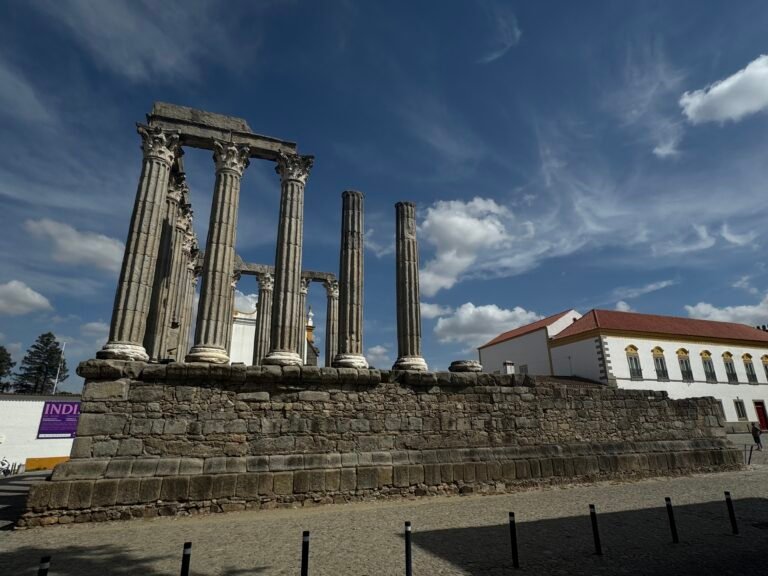
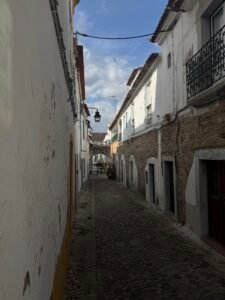
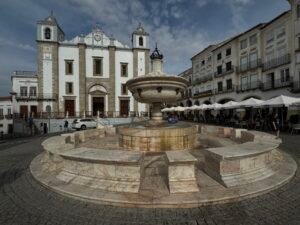
The next morning we took a guided walking tour of Evora that was lead by a local college student. We found the tour on GuruWalk, a platform that lists free walking tours all over the world. Our tour focused on the history of Evora, and was a packed couple of hours of walking through the old city and learning about some of the main historical sites of the old town. Our tour started a little late, our small group of 6 were rather slow walkers, and our guide stuck to his planned route resulting in the tour running quite long. As a result we were a little rushed in finishing up in Evora before setting off to our next destination. At the time, I felt ready to leave Evora as it was pretty crowded with visitors during the day. On reflection, I think it would have been nice to spend a bit more time in the area.




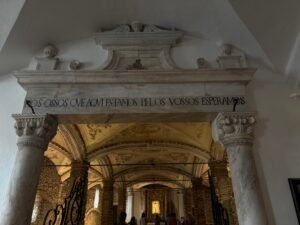
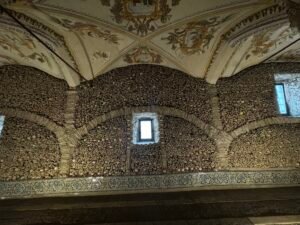
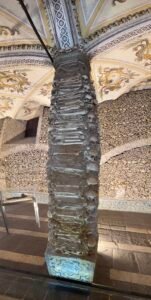
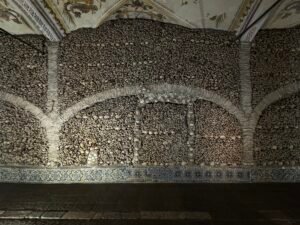
Chapel of Bones: After the tour, I visited the Church of St. Frances and the Capela dos Ossos (Chapel of Bones). The Chapel of Bones is a small chapel adjacent to the main church that is lined with human bones. The chapel was built in the 1600s by three monks from the church who used bones that were unearthed from a variety of Evora churchyards and wanted to make a space for people to meditate on the transient nature of life and the inevitability of death.
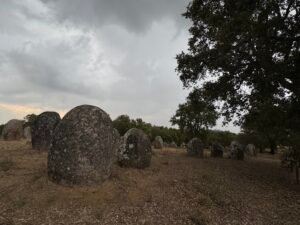
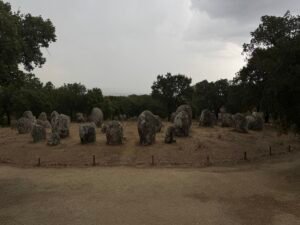
Cromeleque dos Almendres: After leaving Evora we made a detour down a bumpy dirt road to Cromeleque dos Almendres, Portugal’s older version of Stonehenge. Cromlech means “enclosure” and the Cromlech consists of 95 rounded granite stones erected in an oval. It is reported to be the largest megalithic monument in Iberia and is some 2,000 years older than Stonehenge, and was carefully restored by archaeologists in the 1960s. The sky was threatening rain on our drive out to the trailhead and we got rained on just a bit while out of the car. Luckily we were in the car driving back on the dirt road when the sky opened up and poured for 10-15 minutes. It didn’t take long for little streams to run down the road and for the potholes to fill with water.