
Esposende to Viana do Castelo, 25 km/15.5 mi, following a combination of littoral and coastal routes.
For breakfast, we headed over to one of the few bakeries that we were told would be open and found it bustling with other pilgrims and locals. Not surprisingly, we saw several people we had met the day before. We enjoyed our coffee and pastries before setting out for the day.
We started following the littoral route, which stays right along the water, but transitioned to the coastal route because it was better signed. We had also spent the previous three days close to the seashore and we wanted to experience more of the local villages and wooded paths with a bit more diversity in the surroundings. It was a welcome change.

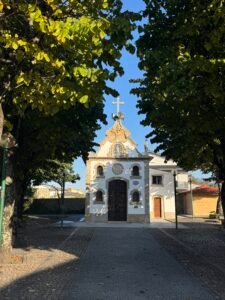

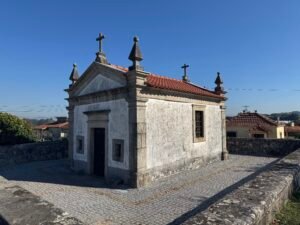
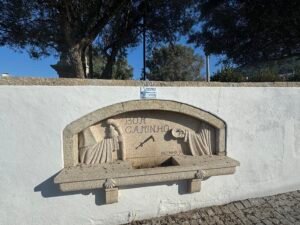
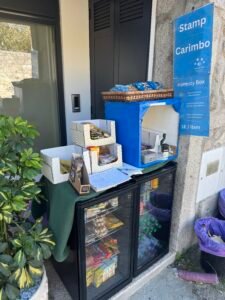
We started noticing public water sources along the way. At first, I wasn’t sure that I could count on refilling water along the way so carried water with me. After a couple days, I began to use these public water sources when they looked pretty safe. There were several that we skipped and I dumped my water out after filling it from one rather sketchy faucet. I stayed healthy, so the water must have been OK!

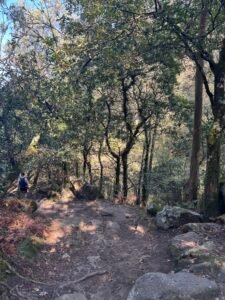
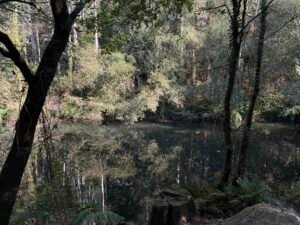
After a while, the trail lead into a wooded area that descended to a peaceful creek and then ascended up the other side to Igreja Santiago de Castelo doNeiva.


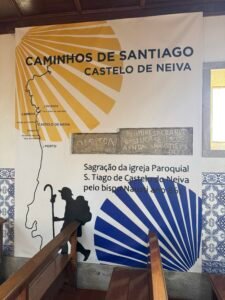
Igreja Santiago de Castelo do Neiva is an important church along the Coastal Camino because it contains a piece of a votive altar from the Roman period 862 containing an inscription of the consecration of the original church dedicated to Santiago. This artifact was found during a renovation of the church in 1931 and is the oldest consecration to the apostle ever found outside of Spain. It, therefore, supports the historical use of the coastal path as a route for people making the pilgrimage to Santiago.

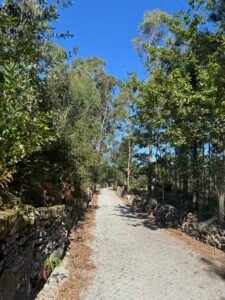
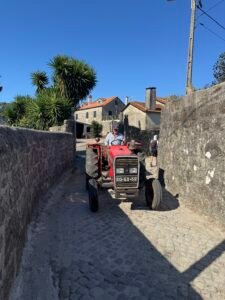
The remainder of the day was spent on a variety of small lanes and dirt paths.

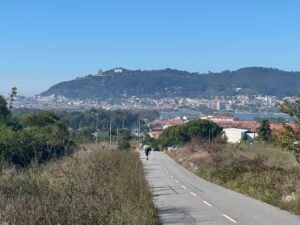
As we neared the end of the day we had a nice view of the Rio Lima and the town of Viana do Castelo, with a Cathedral high on hill overlooking the city. We didn’t know it then, but we would walk up to the cathedral the next morning

Our accommodation was at a family run pension set above their restaurant O’Laranjeira, Pensao O laranjeira. We noticed a line forming outside the bakery across the street late in the afternoon and Chris went over to investigate. He noticed that people were buying a particular pastry so he bought a couple. We then walked down the short distance to the square and enjoyed what I knew as malasadas growing up in Hawaii. I’ve since learned that Malasadas originated in Madeira and the Azores. A very similar pastry is called Bolsa de Berlim in mainland Portugal.

We had inadvertently stumbled onto Confeitaria Manuel Natário, what Google calls the most famous pastry shop in the city due in part to the fact that they fry around 1,000 fresh Bolas de Berlim a day, with batches coming out at 11:30 am and 4:30 pm daily. Bolsa de Berlims are described as a magnificent yeasted doughnut that is fried, rolled in sugar and cinnamon, and filled with rich egg custard (creme pasteleiro). Anyway, that’s more than you likely want to know about this pastry, but it was a highlight for me. It was delicious and held me over until dinner, which was another treat.
The fixed price dinner at O’Laranjeira included appetizers, a salad, an entree, and dessert. The food was excellent, though the service was slow as my solo dinner clocked in at almost 2 hours!