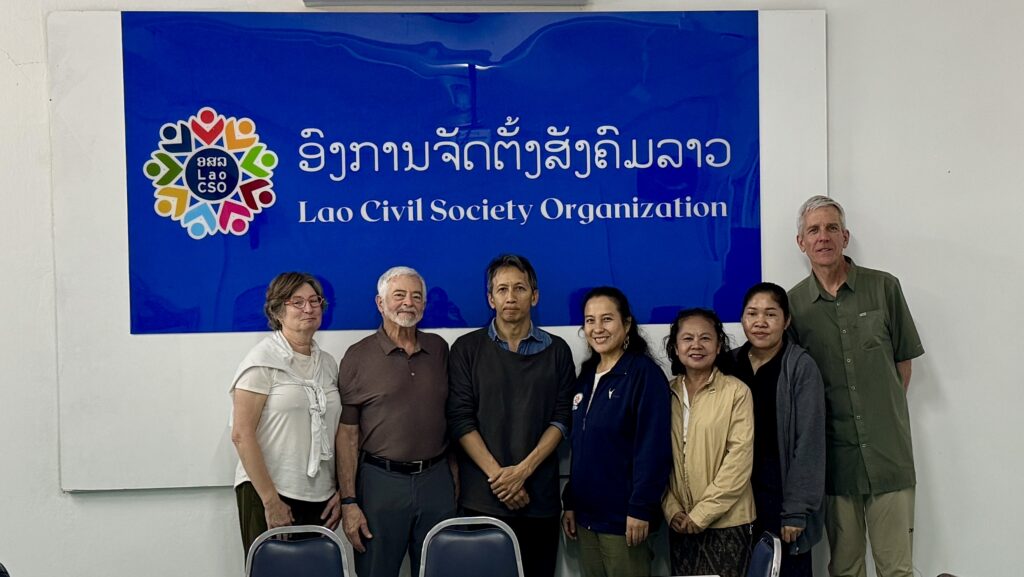
The main purpose for visiting Vientiane was to visit with The Association of Green (TAG), a Pangea grant recipient operating in Laos. TAG’s mission is to help small farmers with organic and sustainable agriculture practices. It also focuses on rural youth employability and capacity building for farmer organizations. It has projects throughout the country and offered to show us projects in the north located outside of Luang Prabang, farm cooperatives located outside Vientiane or a forest conservation project in southern Laos. For logistical reasons and to respect the time of TAG’s staff who would be with us, we settled on visiting organic farm cooperative projects near Vientiane. TAG then went to work and created a full two-day itinerary that included showing us three farms as well as a couple attractions they wanted to show us. Similar to the other site visits we made on this trip, I learned a lot during those two days. It was interesting to see how organizations adapt to work within the parameters permitted by government and how local goals and expectations may not always perfectly line-up with western objectives.
TAG shares office space in Vientiane with several other Lao Civil Society Organizations. They have a staff of 7 people, with just one full time employee. The other six staff are part time employees, many of whom also work parttime for other nonprofits. We were picked up promptly at our hotel with the first stop being TAG’s office. We met in a conference room shared by several organizations. The space was decorated with professional signs expousing the work of the Laos Civil Society Organization (LCSO). According to the logos on those signs, the LCSO appears to receive funding from the EU, Germany, and Switzerland and has identified a wide range of areas to focus on, including work on clearing unexploded ordinance (left over from the Indochina War (Vietnam) when the U.S. dropped over 2 million tons of ordinance, including 270 million cluster bombs), promoting sustainable development, inclusive societies, inclusive education, health initiatives, reducing hunger and inequalities, protecting ecosystems through sustainably managed forests, promoting sustainable agriculture. TAG’s projects fall squarely in the areas of protecting ecosystems and sustainable agriculture focuses of the LCSO
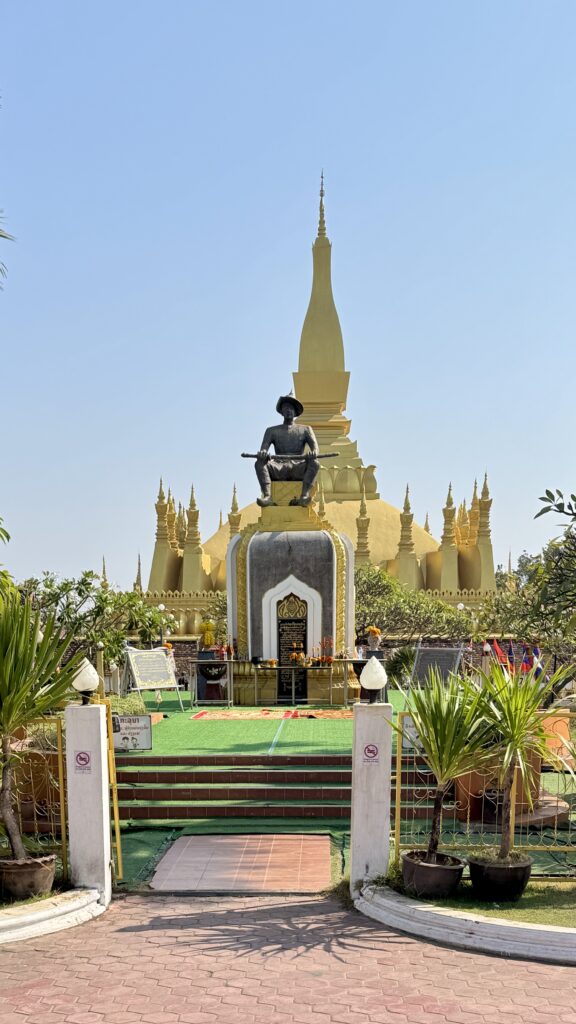
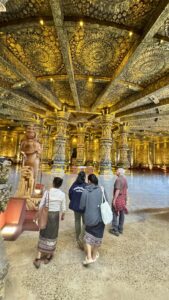
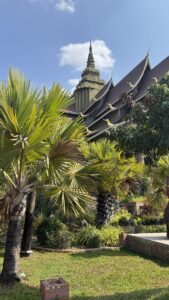
After speaking with TAG’s director and hearing about its various projects and current successes and challenges, we headed out with several women who work on developing TAG’s farmer cooperatives and other sustainable farming efforts. They focus on women led cooperatives as a way to encourage women empowerment. They have also found that women tend to be more open to learning and trying new techniques than many men. On the way to the first farm, we stopped at two general attractions that our hosts were excited to show us. The first, Pha That Luang or Great Stupa, is a well-known symbol and monument dating back as far as the 3rd century and most recently rebuilt/restored after World War II. While the gold from prior installments was pillaged by Thailand and Burma, the current Stupa is covered in a mix of gold paint and approximately 500 kilograms of gold leaf. A statue of King Setthathirath, leader of the Lan Xang kingdom (predecessor of Laos) in the mid 1500s is located in front of the main entrance to Phra That Luang
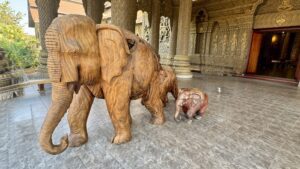
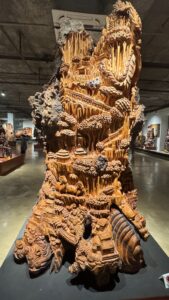
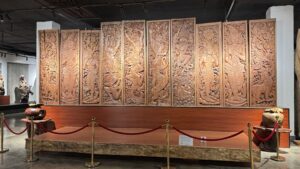
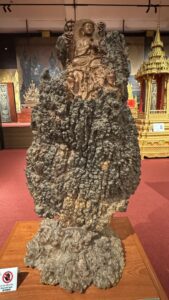
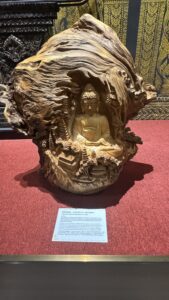
Our second stop was the recently opened Lao Art Museum. This visit was a complete surprise to me. I was expecting a traditional museum located in or near the city center containing paintings and other art pieces with descriptions with attributions for the artist, date of creation, and perhaps a short description of the piece. The Lao Art Museum has been opened for just a year. It is located about 20 kilometers north of the city center along the shore of a small lake. The main entrance is located on the far side of an portion of the lake and requires either walking or taking a tram over a floating bridge. The Museum is a huge ornate building that is almost exclusively filled with wood carvings.
The museum is a private enterprise with very high admission fees (particularly high for residents) and from what I’ve been able to piece together is a legacy project for a wealthy Lao businessman to house his personal collection of wood carvings. While one gallery contained a collection of buddha’s from throughout the country and wider region indicating that they were being preserved at the museum because many of the original locations were unable to protect and preserve them, I wonder about the provenance of some of the older artifacts. Many of the wood carvings contained neither a date of carving nor attribution to the artists creating them. This seemed very odd to me until I read a small explanation of how the museum came to be as we exited the building. After learning that many of the pieces displayed were from the personal collection of Phisth Sayathith, the founder of the museum. Since almost all the pieces were of the same style – carvings that preserved some of the natural wood’s appearance, I suspect that Mr. Sayathith employed carvers and would supply them with interesting burls, roots and other pieces of discarded wood.
I suppose the origin story adds some mystique around the museum. While the source of funding is a question to everyone we talked to about the museum with speculation running from an extremely wealthy patron to funding from Chinese investors, the people we talked to seemed to just treat it as a mystery that the government was keeping secret and that there wasn’t much if anything to be done about it. As I did some internet research for this post, I came across reports indicating that Sayathith owned Laos’ largest steel mill and that he had a private collection of around 30,000 carvings. I also found the a July 2025 report from the Global Initiative Against Transnational Organized Crime that focused on the illegal wildlife trade and how China’s high speed rail line in Laos was facilitating that trade. It notes that almost all Chinese tour itineraries that travel to Vientiane stop at the museum and that there are animal products for sale in the museum’s gift shop. I never made it into the gift shop so can’t comment on the veracity of the claim, but found the tie-in between the high speed rail line and the increase in tourism consistant with my personal experience.
After lunch we traveled a bit further into the countryside and visited our first farm. This was a farm that TAG has been talking to and encouraging it to join its cooperative. The fee free coop puts farmers in touch with other farmers and facilitates the sharing of best practices for growing and selling crops.
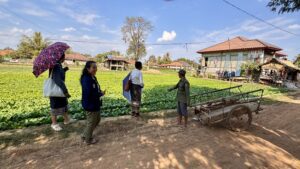
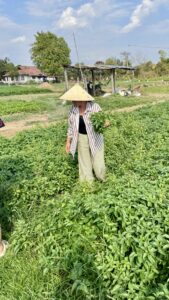
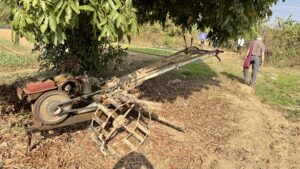
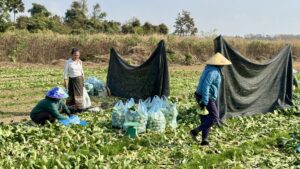
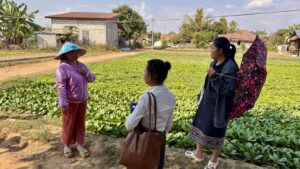
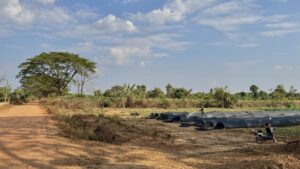
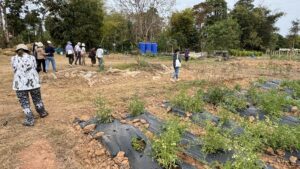
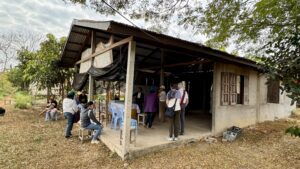
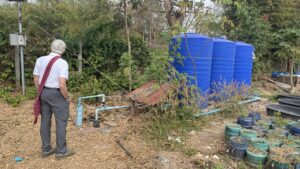
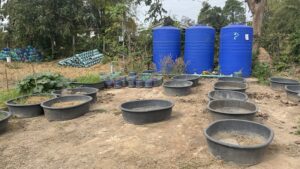
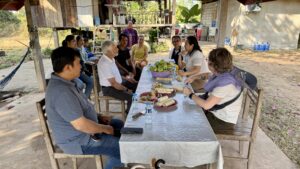
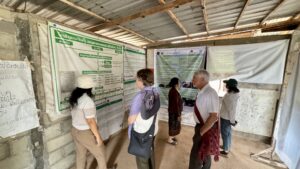
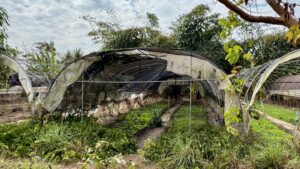
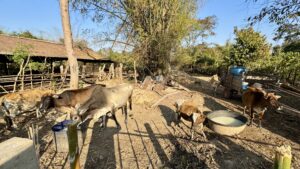
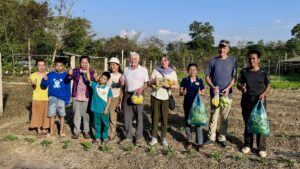
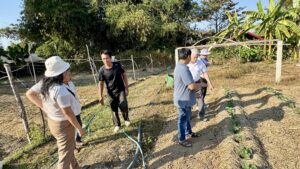
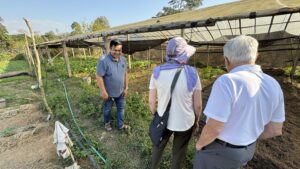
The following day, we visited two farms that were TAG members. We learned how they were using strategic crop planting to maximize sale value, greenhouses to moderate temperature extremes and improve growing conditions and produce quality, solar energy for lighting and hopefully water extraction and irrigation, and other organic and sustainable practices. At the first farm we hear how they were impacted by Covid, then floods two years later, and most recently some of their members lost land and equipment due to a large sink hole and other land subsidence resulting from nearby mining activities. I was impressed by the resilience of the farmers and their pride in what they were doing. I was also struck by their rather rudimentary farming techniques involving significant manual labor on relatively small farms and the how much they could benefit from things such as reliable electricity.
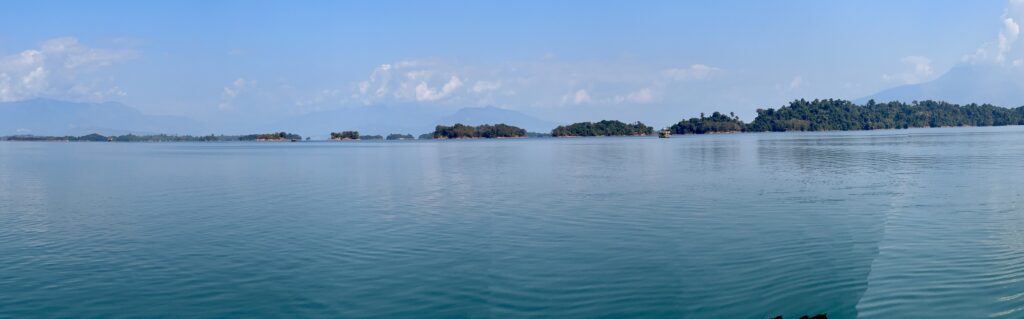
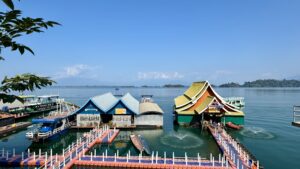
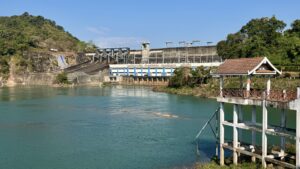
In between farm visits on the second day, we had lunch on the shores of Nam Ngum Reservoir, a large lake created when a hydroelectric dam was built on the Nam Ngum river. The reservoir is about 80 km north of Vientiane, but it seemed much farther because the roads were potholed and rough resulting in a slow and bumpy trip. We had a great two days with TAG and look forward to helping them with future projects.